McMinnville Business Forum Q3 2026: The People Advantage - Five Ways Local Employers Are Tackling Workforce Challenges Together
Aug 20, 2026
The workforce challenges may be shared. So can the solutions.
What does it take to find the right people, keep great employees, build strong leaders, and create a workplace where people want to stay?
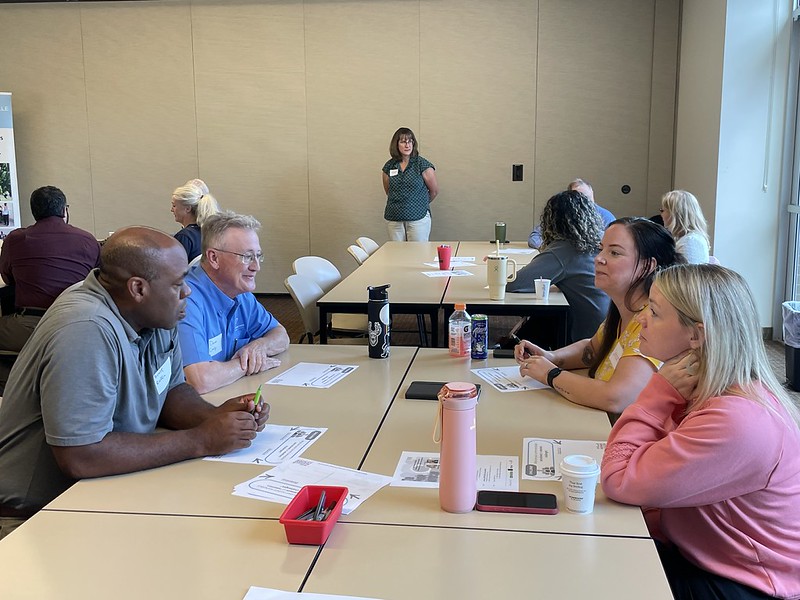
Those questions were at the center of the McMinnville Q3 Business Leader Forum, The People Advantage: Solving the #1 Challenge Together for Retention, Recruitment, and Leadership, held August 13 at Chemeketa Community College.
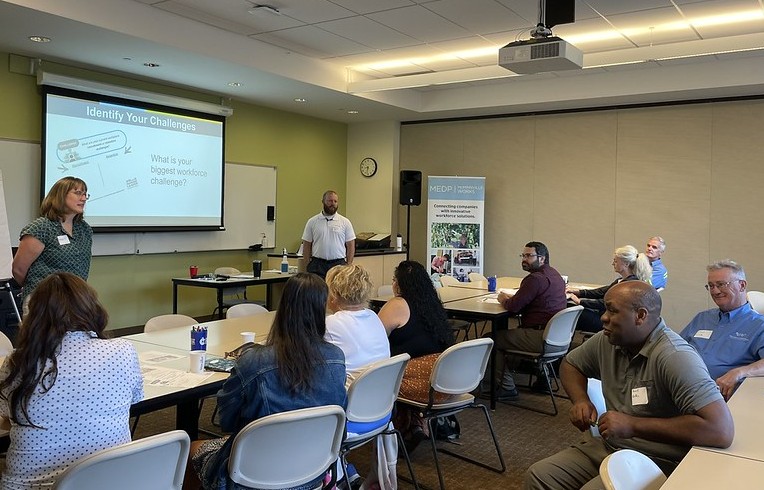
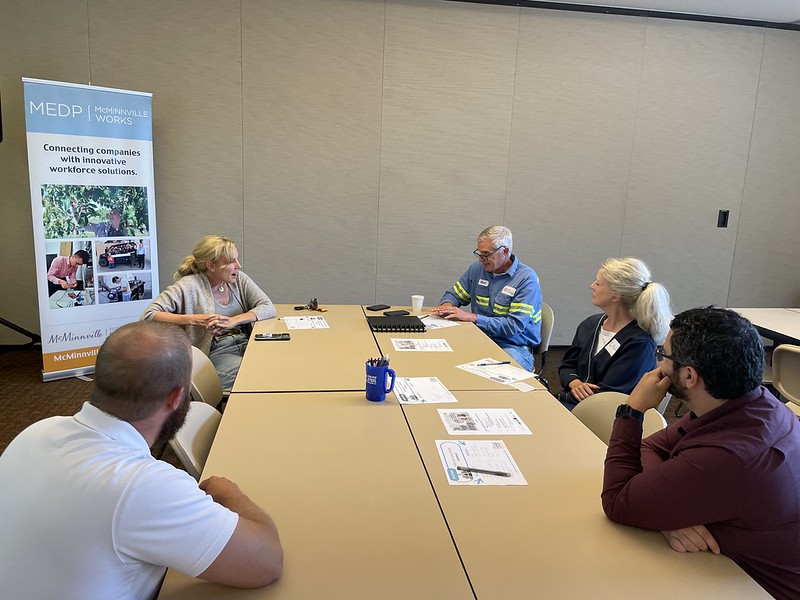
Facilitated by Tiffanie Clifford of Think Ahead and Brandon Malloy of Express Employment Professionals, the forum took a deliberately practical, peer-to-peer approach. Rather than simply talking about workforce challenges, local business leaders were asked to identify the issues they are facing and share practices that are making a difference in their own organizations.
The result was a conversation that reinforced something many employers already know: there is no single solution to today’s workforce challenges—but there are many small, intentional things employers can do to create an employee experience where people feel welcomed, valued, supported, and invested in.
As facilitator Tiffanie Clifford emphasized, the employee experience deserves the same attention businesses give their customers.
“The employee experience should matter just as much as the customer experience. If you take care of your employees, they will take good care of your customers.”
That idea became an important thread throughout the conversation. From the first interaction with a candidate to onboarding, training, development, recognition, leadership, and eventually retirement, culture is being built at every stage of the employee experience.
The Challenges Are Familiar
Before the forum, employers identified a wide range of workforce challenges.
Finding qualified candidates was a recurring concern, including finding technical talent, engineers, mechanically inclined workers, and people who are the right fit for an organization’s values. Employers also cited challenges expanding the entry-level labor pool, punctuality, professionalism and finding candidates who arrive ready to learn, pay attention to detail, follow procedures, think critically and are problem solvers.
But recruitment was only part of the picture.
Retention, engagement, leadership, culture, and employee development emerged just as prominently. Employers identified challenges ranging from staff retention and attendance to employee engagement and empowerment, rebuilding company culture, addressing grievances constructively, developing leaders and succession plans, and training employees while keeping them engaged.
The forum distilled those concerns into five interconnected challenges:
-
Finding the right talent
-
Keeping great employees
-
Developing strong leaders
-
Building an engaged workplace culture
-
Preparing a skilled, future-ready workforce
And perhaps most importantly, the discussion moved quickly from “What is hard?” to “What can we do about it?”
The People Advantage: Five Practices That Matter
The forum’s framework—EXCITE → TEACH → ENGAGE → RECOGNIZE → DEVELOP—offers a simple way to think about the entire employee experience.
1. EXCITE: Make the first impression count.
Recruitment doesn’t begin with a job application, and retention doesn’t begin after an employee has decided to leave.
It begins with the first impression.
Regional business leaders shared several ways to make that experience more intentional:
-
Build relationships with K-12 schools, colleges, apprenticeship programs, and workforce partners.
-
Offer job shadows, internships, and paid internships so prospective employees can experience the work firsthand.
-
Expand recruitment beyond traditional job boards through employee referrals, community organizations, and social media.
-
Hire for attitude, aptitude, and values, then train for technical skills.
-
Include wage ranges in job postings.
-
Clearly communicate company culture, career opportunities, and expectations.
-
Let candidates know what to expect from the interview and hiring process, including timelines for interviews and company tours.
-
Streamline hiring so qualified candidates don’t disappear while waiting for a decision.
The message is straightforward: if you want people to choose your organization, give them a reason to be excited about joining it.
The first impression is the beginning of your culture—not something separate from it.
2. TEACH: Help people understand why their work matters.
Once someone joins your organization, the next opportunity is to help them understand more than what they are doing.
Help them understand why.
The forum’s best practices emphasized connecting employees to the company’s mission, customers, and purpose.
That starts with onboarding.
A strong first-day experience might include a facility tour, introductions to key team members, an explanation of how departments work together, time with senior leaders, and a peer mentor or “buddy” who can help a new employee navigate those first few weeks with regular check-ins.
Teaching doesn’t stop after orientation.
Structured training, coaching, cross-training, certifications, continuing education, and tuition assistance can help employees continue building their skills while strengthening the organization’s internal talent pipeline.
Don’t wait until you need a skill to start developing it.
3. ENGAGE: Communicate, ask, and listen.
Employee engagement is built through relationships—and relationships require ongoing communication.
As Tiffanie Clifford noted, culture matters throughout the entire employee experience—from how someone is welcomed and onboarded to how they are trained, supported, developed, and ultimately experience the end of their career with the organization.
That means engagement cannot be reduced to an annual survey or occasional employee appreciation event. It is built through the everyday interactions that tell people whether they are valued, whether their voices matter, and whether they have a future with the organization.
Participants highlighted the value of regular check-ins and simply asking employees what they need to be successful.
That might mean checking in at the end of Day 1, Week 1, 30/60/90 days, six months, and one year. It can also mean establishing regular one-on-one conversations long after onboarding is complete.
Useful questions don’t have to be complicated:
-
What’s going well?
-
What’s confusing?
-
Do you have what you need?
-
What could we do better?
The same principle applies to team communication. Brief daily huddles can connect employees around safety, priorities, customer commitments, wins, and production goals. Leaders can also ask a simple question:
“What do you need from me today to be successful?”
Ultimately, the goal is to create an employee experience strong enough that people become advocates for the organization.
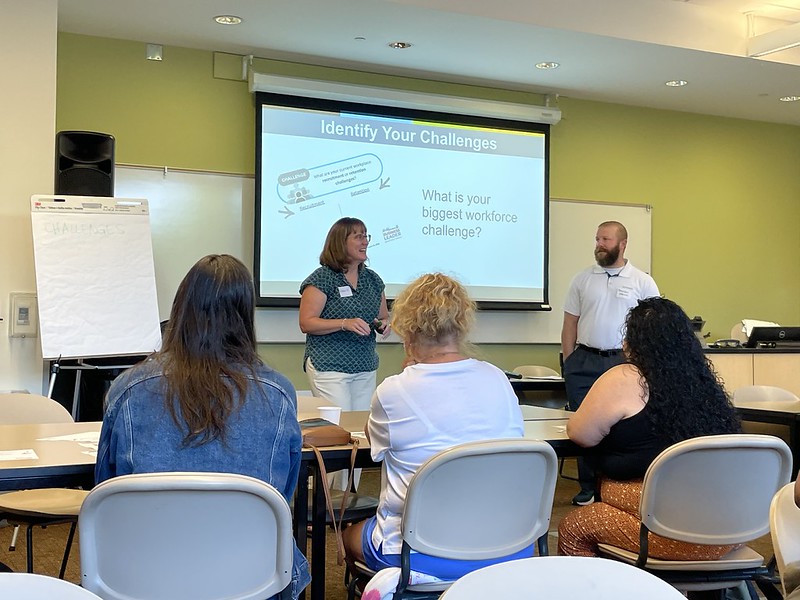
As Tiffanie put it:
“If your employees are recommending their workplace to family and friends, you are on the right path.”
That may be one of the clearest measures of culture there is.
Understanding a Changing Workforce
Engagement also means understanding that the workforce itself is changing.
One observation Brandon Malloy shared during the workshop was that many workplace differences can be traced, in part, to how different generations were raised.
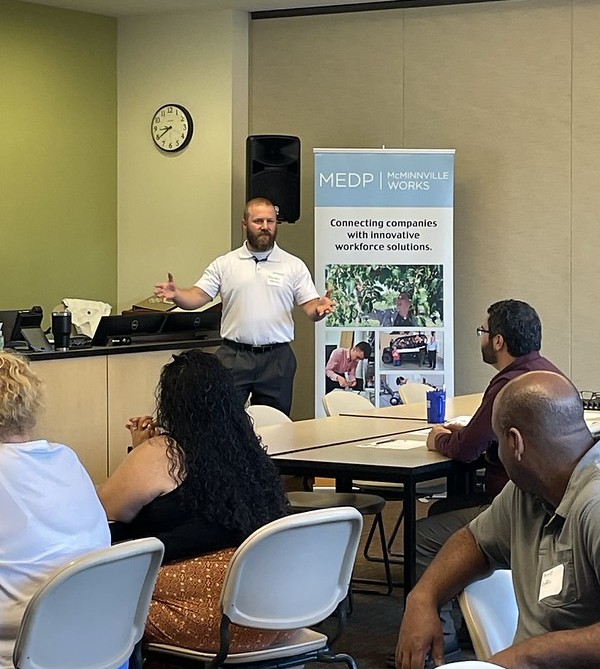
Many children of the 1980s grew up in homes where both parents worked, technology was limited, and kids were often expected to entertain themselves, solve problems independently, feed themselves, and be self-motivated. Those experiences helped shape a generation known for resilience, independence, and a strong work ethic (e.g. Gen X).
As adults, many of those same parents intentionally chose a different approach with their own children. They invested heavily in family time—travel sports, clubs, vacations, and being present for nearly every activity. At the same time, they often worked incredibly hard to provide those opportunities, modeling a culture of long hours, hard work, and constant hustle.
As a result, many younger workers entering the workforce today may have a different definition of success.
Rather than aspiring to work the same long hours they watched their parents work, many place greater value on flexibility, experiences, and work-life balance. Gig work, remote work, and flexible schedules can be attractive because they align with the lifestyle they are trying to build. Traditional life milestones are also happening later for many, which can influence when and how employees value benefits such as health insurance and retirement plans.
Curious about national trends? A Guide to Leading a Multi-Generational Workforce by SHRM also shares key insights.
Brandon framed the shift this way:
“Previous generations often asked, ‘What do I need to do to build a successful career?’ Many younger workers are more likely to ask, ‘How does this career fit into the life I want to build?’”
Neither approach is right or wrong. Priorities are changing.
The goal isn’t to create a different workplace for every generation—or to stereotype people based on their age. It is to recognize that people may communicate, learn, and engage in different ways, and effective leaders take the time to understand those differences and motivators.
4. RECOGNIZE: Show people that their contribution matters.
Recognition doesn’t have to be elaborate.
Celebrate the work anniversaries, certifications, promotions, safety milestones, customer compliments, attendance, team accomplishments, ideas, and everyday effort that move an organization forward.
As the forum framework emphasized, recognizing wins, effort, ideas, milestones, and company success helps employees see that their contributions are noticed.
Other ideas shared by regional business leaders included employee referral bonuses and compensation and benefits strategies that reward longevity. Where possible, businesses can also connect employees to company success through bonuses, gainsharing, or profit sharing.
The larger point is simple:
People want to know that their work matters—and that someone noticed.
And when employees feel valued, that experience can extend beyond the workplace. People who feel good about where they work are more likely to talk positively about their employer—to coworkers, friends, family, and potential future employees.
5. DEVELOP: Give people a reason to see a future with you.
One of the strongest retention strategies is helping employees see what could come next.
That can mean creating visible career ladders, sharing stories of employees who have advanced within the organization, offering cross-training, supporting certifications and continuing education, and creating mentoring opportunities for emerging leaders.
The forum’s framework captured it simply:
Give them a path. Cross-train. Develop. Promote.
Development also means investing in the people who lead others.
Regional employers identified leadership development and succession planning as workforce priorities. Best practices included training supervisors and managers to coach rather than simply direct, give meaningful feedback, recognize accomplishments, resolve conflict respectfully, listen well, and have difficult conversations.
As one participant reiterated, “You can’t have a TEAM, without a COACH”.
Weekly one-on-ones and regular development conversations can strengthen those relationships, while tools such as DiSC and CliftonStrengths can help leaders better understand themselves and the people they manage.
Developing your people isn’t just a retention strategy. It’s how you build your next generation of leaders.
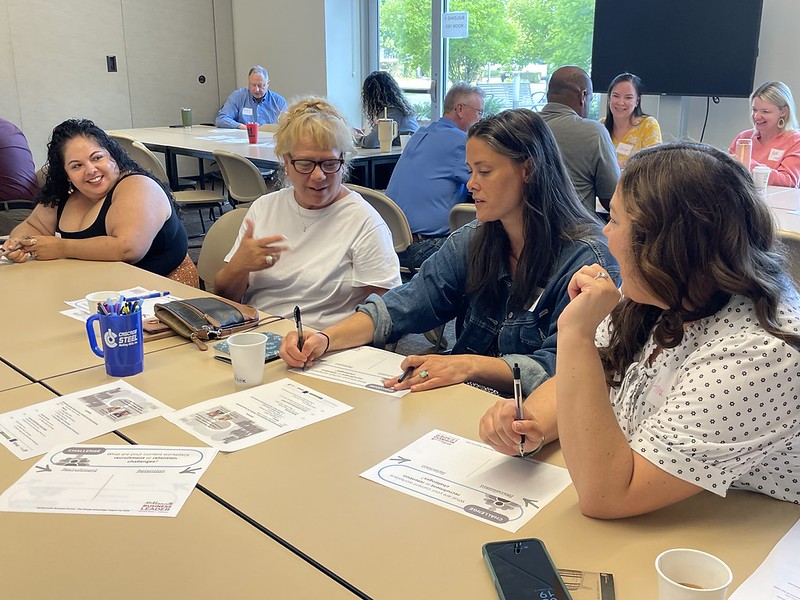
Don’t Put the Plan on the Shelf
One of Brandon’s broader takeaways was that a successful recruiting and retention strategy doesn’t happen by accident—it has to be intentional.
And intentional doesn’t mean creating a plan once and putting it on a shelf.
The best companies continually evaluate, listen, adapt, and improve.
One simple practice employers can adopt is to ask their employees—at least once a year:
-
Why do you stay?
-
What’s working well?
-
What’s one thing you would change?
And make sure you are hearing from both your newest employees and your most tenured team members. Each brings a different perspective on the employee experience.
Most importantly, act on what you learn.
Because culture isn’t something you create once. It is shaped by the cumulative experience of employees throughout their time with your organization—from the first welcome to the opportunities they have to grow, contribute, lead, and eventually retire.
The companies that attract and keep great people are the ones willing to listen, adapt, and continually evolve. What works this year may not work five—or ten—years from now.
The people may change. Their priorities may change. And the best employers are willing to change with them.
What We Heard From Participants
The feedback following the forum reinforced the value of practical, peer-based learning.
Participants described their takeaways as:
-
“Great ideas for recruitment and retention.”
-
“Practical ideas appreciated.”
-
“Improved onboarding, training, coaching, and employee development.”
-
“Training your supervisors and ask the questions.”
-
“Meeting each generation where they are.”
-
“Every business has similar employee issues.”
Another participant appreciated hearing retention suggestions directly from the audience, while another noted the value of learning from organizations facing similar challenges.
And when asked whether they would like to see more regular programming focused on workforce development, every responding participant said yes.
That feedback is significant.
It tells us that employers aren’t necessarily looking for another presentation telling them what they should do. They want opportunities to share what is working, ask questions, compare experiences, and learn from organizations facing similar challenges.
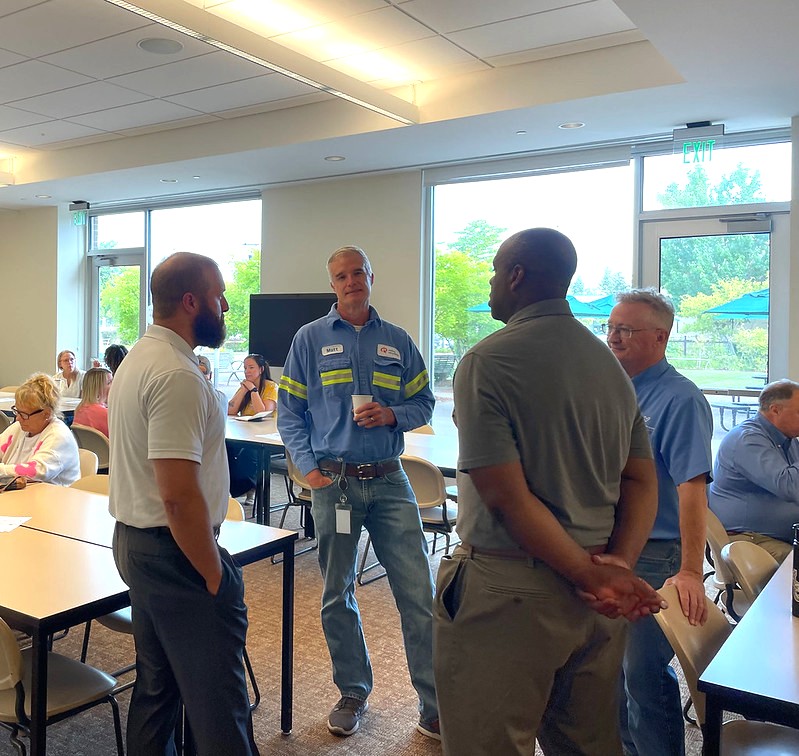
The Workforce Advantage Is a Community Advantage
The People Advantage was never intended to offer a single formula for solving workforce challenges.
Instead, it created space for employers to recognize the challenges they have in common—and to discover that many solutions are already being tested and practiced by their peers.
The most effective practices shared were not necessarily complicated:
-
Communicate early and often.
-
Build relationships before problems arise.
-
Recognize people frequently.
-
Explain the purpose behind the work.
-
Invest in leadership at every level.
-
Create visible pathways for growth.
-
Develop talent instead of waiting to hire it.
-
Listen as much as you lead.
-
And keep adapting.
These are things businesses of all sizes can adapt to their own workplaces.
And they reinforce the role of collaboration in workforce development.
MEDP’s Workforce Integration Network (WIN) brings together local industry employers, educators, workforce partners, and community business leaders to identify workforce challenges and create practical, community-driven solutions.
The People Advantage reminded us that workforce development isn’t something any one employer can—or needs to—solve alone.
When employers share ideas, experiences, and solutions, we strengthen not only individual workplaces, but the broader talent ecosystem of McMinnville and Yamhill County.
And perhaps the most important takeaway is this:
Take care of your people, and they will take care of your customers.
Create a workplace where people feel welcomed, valued, supported, and able to see a future—and they may become your greatest recruiters.
The workforce challenges may be shared. The opportunity is to share the solutions, too.
To engage further with fellow workforce development leaders, join us at the monthly WIN – Workforce Integration Network meet-up held at Chemeketa Community College on the first Wednesday of the month from 3–4 p.m, RSVP linked.
Click here to view the Q3 Forum slide deck.